
Overview
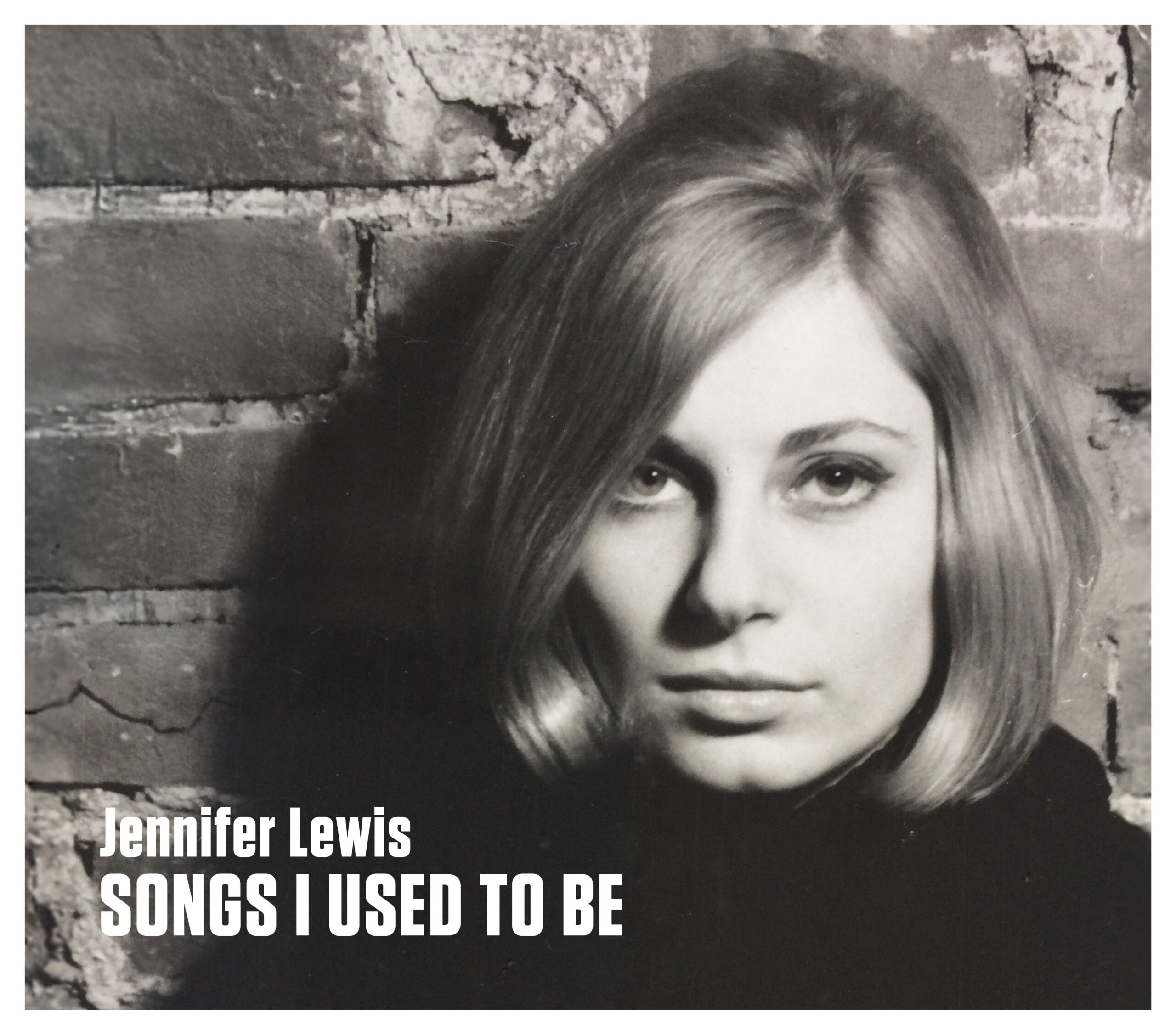
One of WiO’s founder-members, Jenny Lewis, is widely respected as a poet, playwright and educator. But she first found fame writing for, and performing in, all-girl pop groups during the 1960s, one of whose haunting singles was featured on the iconic TV show Ready Steady Go! Later this year she releases a CD, Songs I Used To Be, which places a handful of her original demos from alongside some recent re-recordings. She says: ‘Making this album has been as much about celebrating lifelong friendships and honouring the girls we used to be as it has about revisiting my songs’.
More info from Jenny: jennyklewis@gmail.com
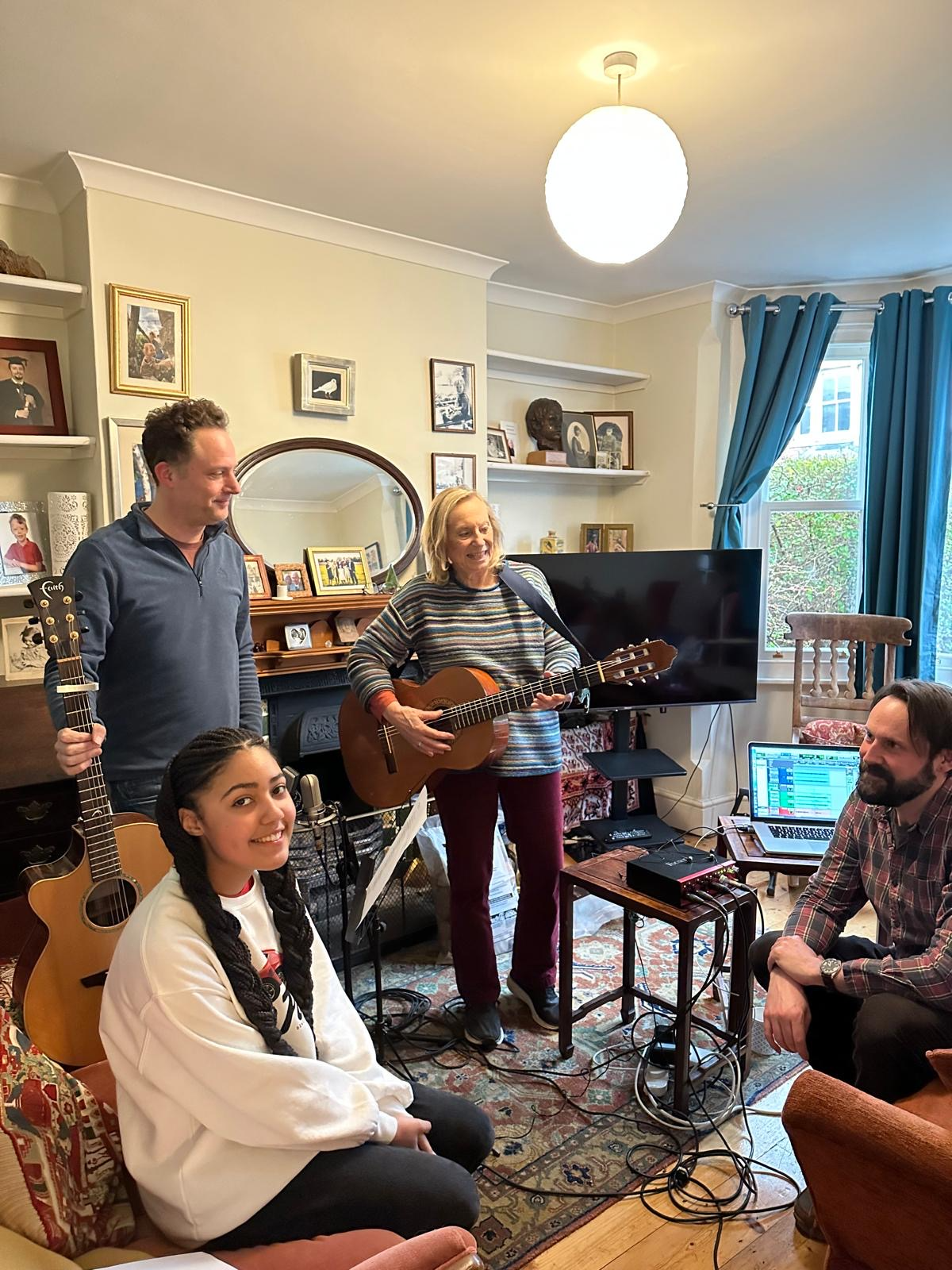
Photo caption: Recording session, Jenny and son Tom standing, with granddaughter Abigail and music producer Rowland.
Phoro credit: Emilia Ziozi
Interview and full story
In 1965 a new recording duo going under the name of ‘Jennifer Lewis and Angela Strange’ was featured on the iconic pop/rock TV showcase, Ready Steady Go! Jennifer (Jenny) Lewis went on to forge a successful career as a poet and playwright (jennylewis.org.uk), and was one of the founder members of Writers in Oxford. But recently she’s been revisiting her first career as a singer-songwriter, dusting down some of her original demos, and cutting brand new versions of songs she wrote and performed during her early twenties back in the Beatles era. The result is a CD due to be released later this year with the intriguing title, Songs I Used to Be. Here she talks with novelist and poet Haydn Middleton, once a fellow Writers in Oxford committee member.
Jenny, you’ve become a well-established and highly-respected figure in the contemporary poetry pantheon, but you first caught the public’s eye back in the 1960s as a pop musician. Where did this lifelong passion for words and music come from?
Probably from my grandmother’s flat in Hammersmith, which is where I grew up in the 1940s. My father died when I was five months old, so my mother, older sister Gillian and I moved in with ‘Nanny’. While I was learning to read and write, I discovered rhyme – and poetry has been a light in my life ever since. Great Aunt Lilian (an opera singer) gave us a boxful of 78 rpm records including Gigli, Richard Tauber and Kathleen Ferrier, which we played over and over. Nanny also read us the Bible and Shakespeare, and Mum used to hum along to the Light Programme with a background of tweeting from our budgie, Nicky. Aunty Joan was a ballet dancer, so we were often taken to the ballet. I think traces of all this experience can be detected in the work I’ve produced over the years.
Is it true that the first band you were in, around the turn of the 1960s, played skiffle?
For my 16th birthday I was given a second-hand guitar which I called Benji, and I learned to play from Alan Lomax and Peggy Seeger’s American Folk Guitar instruction book, which included blues, folk, and cowboy songs like ‘The Streets of Laredo’. When I’d mastered a few basic chords, yes, I started a skiffle group at school with my two best friends, Trisha on tea chest bass and Ferny on washboard and thimbles (they sometimes switched around). Another friend, Sybil, was on tambourine, maracas and triangle. We played an eclectic mix from Lonnie Donegan’s ‘Freight Train’ and ‘Worried Man Blues’, to harmonising covers of popular hits including Buddy Holly’s ‘Peggy Sue’ and ‘That’ll Be The Day’, the Everley Brothers’ ‘Dream’ and Cliff Richard’s ‘Travelling Light.’
But once you left school and headed off to Oxford’s Ruskin School of Art, you started generating your own material, right? The lifelong friendship you made at the Ruskin with Vashti Bunyan, the celebrated future solo artist, was clearly crucial. How did your musical relationship with Vashti evolve during this period?
Well, in the freezing January of 1963, Vashti and I moved into two tiny, adjoining attic rooms on Iffley Road with a hamster called Heap who lived in my guitar and had to be tempted out with treats. My boyfriend Martin used to pick me up from the steps of the Ashmolean every Friday in his blue Austin Healey Sprite sports car. He taught me how to punt and encouraged my poetry. ‘Willow Song’ was written for him. Vashti started to teach herself to play on my guitar, then acquired her own guitar, and we were soon both writing and singing songs in our attic, including one we wrote together ‘17 Pink Sugar Elephants’, which later became the iconic ‘Train Song’ with new lyrics by Alasdair Clayre. My songs were rooted in the pop music of the time, with the folky bias of singer-songwriters like Bob Dylan, Joan Baez and Donovan, but combined with the more ‘pop’ aspect of bands like the Honeycombs and the Seekers alongside whom Angy and I appeared on Ready Steady Go!
Angy being the friend who completed the trio you and Vashti then formed, ‘The Three of Us’?
Yes, we two were joined by Vashti’s childhood friend Angy Strange and we’d wear matching Mary Quant outfits to play college balls and parties and the occasional London gig. When Vashti left Oxford to pursue her own fabled career, Angy and I continued as ‘Jennifer Lewis and Angela Strange’, performing with Nigel Tully’s Oxford band ‘The Four Beats’ (renamed ‘The Dark Blues’). Our first record, ‘Bring it to Me’/ ‘You Know’ (1965, Verve Folkways US, Columbia UK) reached number 50 on the Radio Caroline Countdown of Sound, and we followed it up with ‘I’ve Heard it All Before’ (1966, Columbia, UK). Since then all the music I’ve written has been for children’s musicals or poetry performances, including a film poem, Anthem for Gilgamesh https://www.youtube.com/watch?v=y0rLG80jQko. And now there’s Songs I Used To Be…
This new album, then, features original material from the 1960s as well as some very recent re-recordings? What’s the story behind these new versions, made so many decades later? And can you tell us whether you still are these songs you used to be?! Or have the songs themselves evolved, to form a kind of valued complement to you as you are today?
Making this album has been as much about celebrating lifelong friendships and honouring the girls we used to be as it has about revisiting my songs. This time round, my voice has a different quality: lower and perhaps more vulnerable. We’ve used that to give the songs a more gentle, reflective and intimate feel. I’m grateful to everyone involved, especially my family – sister Gillian, sons Tom (guitar), Ed (drums) and granddaughter Abigail (vocals); not forgetting how it all started with ‘The Three of Us’, to whom Songs I Used to Be is dedicated with love.
Leave A Comment