
In his Introduction to the Penguin Modern Classic edition of Chocky (2010), one of John Wyndham’s later novels, Brian Aldiss tells the story of how Wyndham came by the name for his most famous creation. Drinking a sherry on a Sunday in his local pub, he overheard two gardeners chatting about their allotments. One said to the other, ‘I got a great big weed growing behind my shed. I reckon it be a triffid!’
Wyndham gives a more scientific explanation in The Day of the Triffids (Michael Joseph, 1951) for how the ambulatory plant got its name, stressing that this was no incidental weed but the result of human meddling with nature. And in a television interview he described how the formative image of a lethal ‘vegetable’ emerged from a twilight walk down a country lane where he felt that the branches overhead ‘might come over and strike down, or if they had stings, sting at one, and the whole thing eventually grew out of that. The moving vegetable would be a real menace.’
[Wyndham, so averse to publicity that he became known as ‘the invisible man of science fiction’, did give a single television interview to the BBC Tonight programme with excerpts from his novels read by news stalwarts like Cliff Michelmore and Alan Whicker. Originally broadcast on 6 September 1960, it can be viewed on the BBC archive. A very slightly different version of how Wyndham was inspired to write his most famous novel is given in John Baxter’s A Pound of Paper (Doubleday, 2002). According to Baxter, Wyndham’s widow recalled strolling with her husband at night and, as they passed a bank of thorny brambles thrashing in the wind, his saying, ‘My God, if they could walk and think, how terrible they would be.’]The Day of the Triffids made Wyndham’s name and established him as the successor to H. G. Wells, but it was the culmination of many years of uncertainty and frustrated literary ambition. Born in 1903 near Edgbaston to parents who separated when he was eight, Wyndham did not enjoy a happy childhood until he was sent to Bedales in the village of Steep, Hampshire. The school might have been spartan but its relatively liberal nature, unorthodoxy and sense of fellowship, even its pastoral setting, were things that affected Wyndham for the rest of his life. If, from the apocalyptic ruins of novels such as Triffids and The Kraken Wakes (Michael Joseph, 1953), there emerge the outlines of a different and more egalitarian community, they have echoes of Wyndham’s teenage years in the South Downs.
In the words of his biographer Amy Binns (Hidden Wyndham, Grace Judson Press, 2019), Wyndham ‘left school to an uncertain future typical of Bedales graduates’. He toyed with various careers, including farming and advertising, before fixing on full-time writing. For years he contributed sci-fi short stories to American pulp magazines like Amazing Stories writing as John Benyon Harris, his birth name (Wyndham had a suite of middle names from which to pick pseudonyms). It’s a mark of his modest and faintly unconventional nature that he spent thirty years living frugally at the Penn Club in Tavistock Terrace, and later in Bedford Place, in the heart of Bloomsbury. He began a devoted and lifelong relationship with Grace Wilson, another Penn resident and an independent-minded English teacher. For many years they were unable to marry because Grace would have lost her job had they done so; that, together with the unhappy experience of his parents, almost certainly contributed to Wyndham’s ambivalence toward traditional social structures. During World War II he worked as a censor for the Ministry of Information at Senate House, which becomes in The Day of the Triffids a gathering place for those who are still sighted after a blinding, worldwide meteor shower. Later, Wyndham enlisted and served as a cipher operator in the Royal Corps of Signals, arriving in France soon after D-Day.
The post-war period produced more short stories and false starts in other directions, including a detective novel, until Wyndham sent an early version of Triffids to Frederick Pohl in New York. Pohl was a fellow science-fiction writer but, more to the point, also a literary agent. After extensive revisions Pohl sold the story to Collier’s for serialisation for $12,500. This was a life-changing sum, the equivalent of many times the average annual wage in Britain. For British publication Wyndham approached Robert Lusty, a connection from the Penn Club and deputy chair of Michael Joseph, saying in characteristically tentative fashion that he was looking for advice as he didn’t think the story was right for the publisher. Lusty disagreed, the book was published and John Wyndham never looked back.
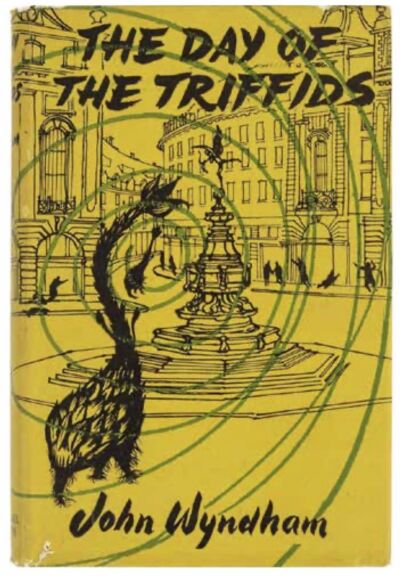
Fig. 1: The dust-jacket front cover of the first edition of The Day of the Triffids, designed by Patrick Gierth.
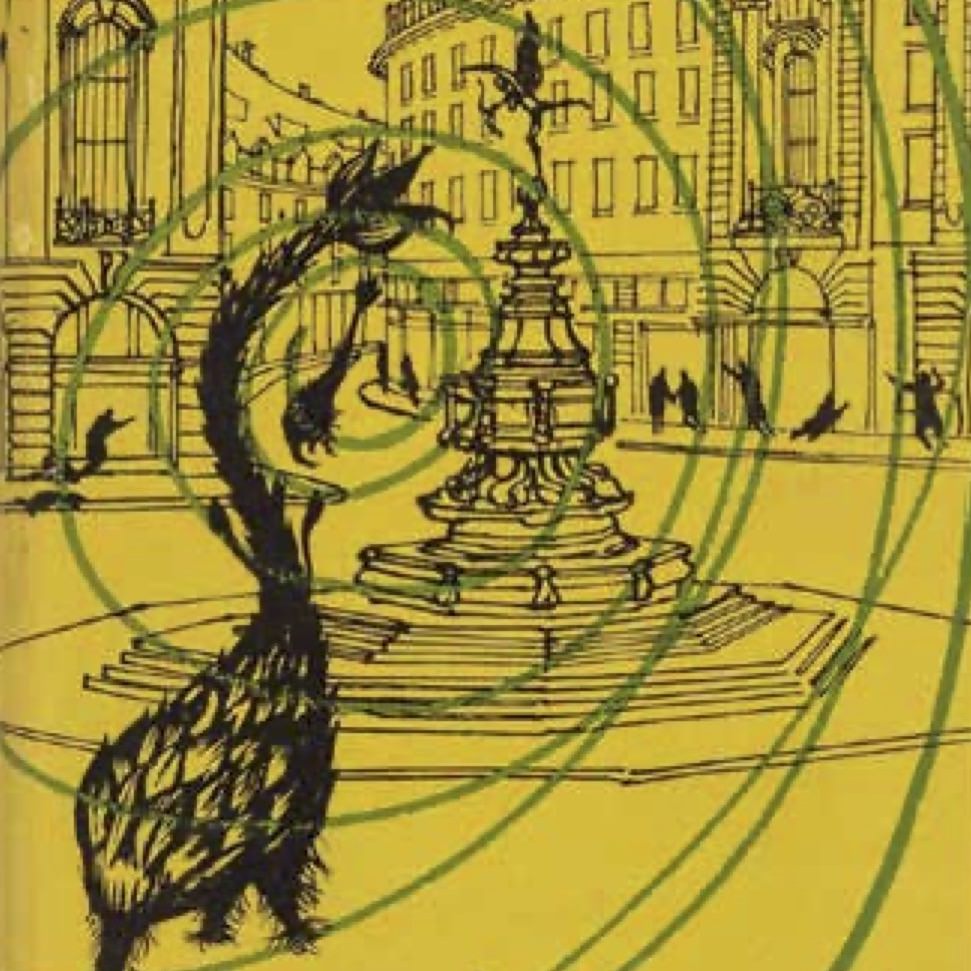
The Day of the Triffids was issued as a mainstream novel, with an enticing cover by the illustrator Patrick Gierth depicting a couple of triffids prowling round Piccadilly Circus, empty except for a few small, flailing human figures. (In the same year Gierth produced another memorable cover for Geoffrey Household’s A Rough Shoot, also published by Joseph.) The cover shows something terrible and inexplicable happening in a very familiar setting, and this contrast became the template for several in the sequence of highly successful novels which followed the publication of Triffids.
After years of roaming in space for his pulp magazine yarns, Wyndham had come back down to earth and found his authentic literary self. His real interest was not in interplanetary voyages or scientific gizmos but in the way people and society reacted under extreme stress. As a firewatcher on the roof of the Penn Club during the Blitz, Wyndham had glimpses of destruction that he would later incorporate into his fiction; similarly, walking the streets revealed not only the resilience but the darker side of the wartime capital, the looting and assaults, handy material for a dystopian vision. It wasn’t all gloom, though. If the events that unfolded in Wyndham’s novels were appalling, they were also in some curious way appealing. The notion of a clean slate, of restarting society, or some slimmed-down version of it, can have a peculiar resonance. Wyndham’s central characters tend to be no-nonsense, practical males accompanied by women who are also no-nonsense, etc. In other words, they are well qualified to survive, and perhaps to thrive.
There could even be a picturesque, slightly surreal quality to these fresh worlds, as in The Kraken Wakes (Michael Joseph, 1953) where alien invaders, dwelling at the bottom of the sea, precipitate the melting of the polar ice caps. Low-lying land is inundated. From a vantage point in the National Gallery, the narrator watches the water lapping round Landseer’s lions in Trafalgar Square and wonders what Nelson would make of his new view.
Wyndham shifted his ground with The Chrysalids (Michael Joseph, 1955), set in Labrador in the distant future and envisaging a fundamentalist, post-apocalyptic community in which any deviation from the physical norm in humans or animals is considered a ‘blasphemy’ to be punished by death or exile. The nature of the apocalypse or ‘Tribulation’ is never made clear but is probably nuclear war, a spectre which haunts much of Wyndham’s work. A group of children develop telepathic powers – a punishable mutation – but eventually break free of their stultifying society. Often cited as the strongest of Wyndham’s novels, it was well received, no doubt helped by the pleasing artwork on the jacket of the UK first edition (by illustrator Brian Wildsmith) depicting a footprint in the sand. Closer examination reveals the foot to have six toes.
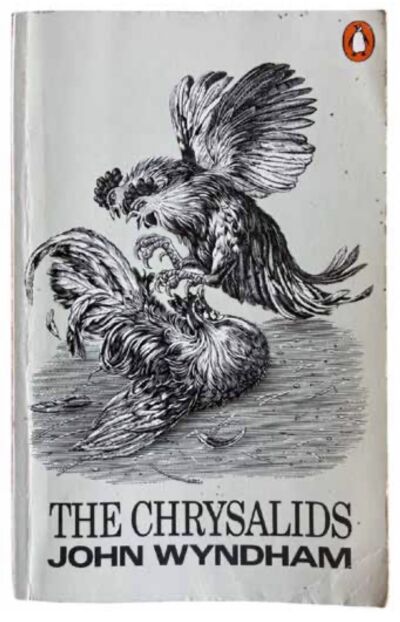
Fig. 2: The front cover of the Penguin 1979 reprint of The Chrysalids.
The best of John Wyndham’s later books was The Midwich Cuckoos (Michael Joseph, 1957) in which all the inhabitants of an archetypal Wiltshire village fall into a trance during which the women of childbearing age are apparently impregnated by aliens. The children who emerge nine months later are strangely similar to each other though worryingly different from their mothers. They have golden eyes and blonde hair. They display a kind of ‘hive mind’, something which was always of interest to the author, but unlike the youngsters using telepathy in The Chrysalids, these intruders on the English pastoral scene have a more sinister side to them, capable for example of causing a car driver who has injured one of them to have a fatal accident. In other hands, the traditional tropes of science-fiction such as alien invasion, possession and manipulation are simply outlandish or even ludicrous, but Wyndham had the knack of grounding his stories in the everyday world even as that everyday world was being wrenched apart.
The Midwich Cuckoos was an immediate success, reprinting within weeks, and in 1960 was filmed as Village of the Damned, starring George Sanders. The most successful of Wyndham’s screen adaptations, it is now rightly regarded as a cult classic. One of the notions lurking behind these two books featuring gifted if odd youngsters is that we scarcely have need of interplanetary visitors since they, the children, might already be the aliens among us. It’s no coincidence that Wyndham’s novels appeared in the mid-1950s just as the adult world was becoming aware of, and agitated by, the rise of a distinct teenage culture.
Now buoyed by substantial royalties and working at a slower rate, Wyndham produced two more novels before his death following a heart attack in 1969. Trouble With Lichen (Michael Joseph, 1960) dramatises the discovery of an anti-ageing drug extracted from an obscure lichen. As the title suggests, this isn’t an undiluted benefit, and Wyndham shows the sharply diVerent reactions of the two biochemist discoverers, one male, one female. In line with the approving attitude elsewhere in his fiction towards strong, decisive women, more weight is given to the female protagonist of Trouble With Lichen than to the man.
In Chocky (Michael Joseph, 1969) he returned to the theme of the possessed child but this time on a smaller scale. The parents of 12-year-old Matthew notice that the boy has an unusually active and persistent ‘imaginary friend’ with whom he has frequent conversations. After running through possible explanations, including mental illness, it turns out that Chocky is a benevolent presence, a ‘scout’ from a distant universe lodging inside the child’s mind, here to learn about and perhaps to guide humanity. A child is chosen as being more malleable than an adult. The grand and catastrophic strands of Wyndham’s classic fiction are here replaced by something homelier. Margaret Atwood, a long-time admirer of the author, notes in her afterword to a recent edition: ‘Wyndham keeps the novel’s tone light: Chocky is close to a domestic comedy, much like E.T., a film I’m guessing may have been partly inspired by it’ (NYRB Classics, 2015).
Indeed there is a Spielbergian quality, avant la lettre, to Wyndham’s later fiction, with its focus on childhood and its intermittent optimism. It is perhaps the thread of hopefulness running through almost all his work which caused Brian Aldiss to refer disparagingly to him as a ‘cosy catastrophist’. The adjective is misplaced, however. Wyndham was capable of truly disquieting visions, as in the novella Consider Her Ways, first published in an anthology Sometime, Never (Eyre & Spottiswoode, 1956). Wyndham’s story envisages a society in which men have become extinct and a few select women are able to reproduce artificially. Sometimes interpreted as a rather grim feminist parable, Consider Her Ways fulfils one of the functions of speculative fiction, to make the reader think as much about the present as the future.
Like many of Wyndham’s readers and admirers, I first came across him in my early teens, pleased to find something ‘modern’ after Journey to the Centre of the Earth or The Time Machine. Indeed, I remember thinking – this was not long after the beginning of the 1960s – that all the discussion about the need for new social arrangements, and particularly sexual ones, in the utterly changed world of The Day of the Triffids was a bit daring. My collection consists mostly of Penguins from that era, but I have two Michael Joseph firsts, acquired a few years ago at Blackwell’s and from the library of John Baxter. Neither Trouble With Lichen or Chocky has the cachet or the collectibility of the really desirable quartet from Wyndham’s first burst of success and were more modestly priced at £75 and £50 respectively.
Courtesy of Blackwell’s Rare Books, current figures for that famous quartet put Triffids in the region of £1,200 and upwards (though signed copies can go for £11,000 or more), while both The Kraken Wakes and The Midwich Cuckoos are available for around £750 and The Chrysalids for £600. My copy of Lichen has doubled in value so it may be that Wyndham’s more substantial books are also on a rising curve. I hope so because I think his novels are worth collecting both as exemplary science fiction and, though this may sound paradoxical, as very characteristic products of the 1950s and early 60s.
The other two contributors to Sometime, Never, the novella collection previously mentioned, were William Golding and Mervyn Peake. At the time, Wyndham would have been the most familiar name, with three best-selling novels under his belt (Lord of the Flies had appeared only two years before). Now, nearly three quarters of a century later, Wyndham remains enduringly popular, the majority of his books never out of print and his visions of the future still influential. Alex Garland, the screenwriter of 28 Days Later (2002), has acknowledged the influence of The Day of the Triffids on the film. Both begin with a man waking up in hospital and discovering a London landscape which has suffered a terrible transformation. But I think that the placing of him alongside Golding and Peake, despite being an accident of anthology as it were, tells us something of significance. With his sometimes-askew imagination, his willingness to explore daunting areas and his very English sensibility, John Wyndham has an honourable place in that high literary company.
With thanks to The Book Collector, Spring 2026 edition.