
Why do film producers feel they need to distort the facts of a period in order to make their point? Do they think viewers are so simple-minded that accuracy is unnecessary?
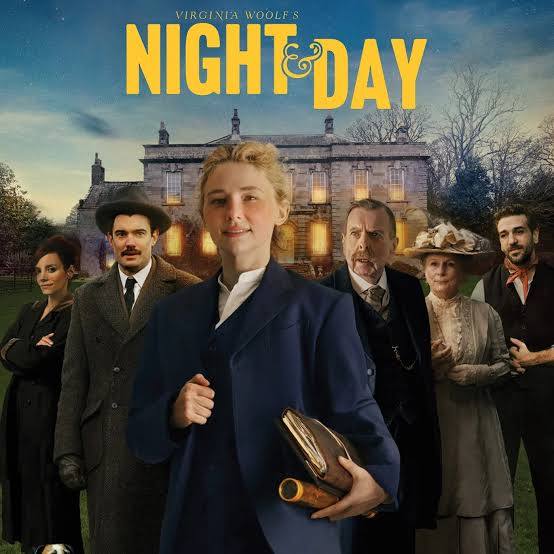
Virginia Woolf’s novel, Night and Day, was a study of a young Edwardian girl who was more interested in maths and astronomy than finding a husband. Tina Gharavi’s film takes this obsession further, making the ambitious Katharine apply to Cambridge to further her career.
But here the film seems to find it necessary to exaggerate the prejudice against women studying, by staging a mock interview with three male physicists, who would never be interviewing her anyway! The facts are that Katharine would have been applying to a college, not a faculty. And in 1910 Newnham College actually had more than 10 women studying physics, using the Cavendish Laboratory. Admittedly, these women could not be awarded degrees until 1948, but to exaggerate the difficulty of entry through this fake interview scene (apparently located in the cloisters, for some reason) actually reduces the credibility of the situation.
The extent of astronomical knowledge is more accurately portrayed: surprisingly in 1910, when Halley’s comet appeared across the sky, physicists still thought the universe was finite, and confined to the Milky Way. It was only when Hubble’s telescope extended their visual range in the 1920s that scientists realised the unlimited extent of the galaxies. Though we are led to believe that Katharine was already aware of this possibility in 1910 with her tiny home-made telescope!
Other distortions of the novel to make the film producer’s point include the introduction of a gay relationship: the character of Cyril in the novel has two children with the woman he is living with, but not married to, which would be radical enough in those times. But Gharavi takes his status further, making him the gay cousin of Katharine, with a black lover who pours out his heart to her after Cyril dies dramatically and unexpectedly, just beyond the ha-ha of the country house they are visiting.
So we already have three strong themes from Edwardian times, of women’s suffrage, higher education and unorthodox living situations; but do audiences really need those realities to be pulled out of shape to make a modern point? Go back to the truth of the novel and be amazed, with a rather softer soundtrack too…
Brenda Stones/3 July 26